
IPATA Pet Travel Questions Answered: Expert Advice from Relopet International
Planning a move with your pet often comes with dozens of questions. Can pets safely fly? Do they need a special crate? Is sedation recommended? How far in advance should you start planning?
As a proud member of the International Pet and Animal Transportation Association (IPATA), Relopet International helps pet parents navigate these questions every day. While every relocation is unique, there are industry best practices that apply to almost every journey.
Below are some of the most frequently asked questions about IPATA pet travel and what every pet owner should know before relocating.
What Is IPATA?
The International Pet and Animal Transportation Association (IPATA) is a worldwide network of professional pet shippers committed to the safe and humane transportation of animals.
IPATA members follow high professional standards, stay informed about changing international regulations, and work closely with airlines, veterinarians, and government agencies to ensure pets travel safely.
Choosing an IPATA member means working with professionals who understand the complexities of international pet relocation—not simply booking a flight.
Can Pets Travel by Plane?
Yes, and for international relocations, flying is often the safest and most practical option.
Modern aircraft transport live animals in specially designed, temperature-controlled and pressurized cargo compartments that are separate from passenger luggage.
Millions of pets travel safely by air every year when proper procedures are followed.
For many destinations—including Australia, New Zealand, the United Kingdom, and Europe—air travel is often the only practical mode of transportation.
Can Pets Travel by Train or Bus?
Ground transportation policies vary widely.
Many long-distance bus operators do not allow pets, except for service animals.
Some rail operators permit small cats and dogs in approved carriers, while others prohibit pets entirely.
Policies differ between countries and carriers, so it’s important to verify requirements before making travel plans.
Can Relopet Help Me Move My Pet Internationally?
Absolutely.
Relopet International specializes in relocating pets from Canada to destinations around the world, including countries with some of the strictest import requirements.
Our team assists with:
Veterinary documentation
- Health certificates
- Vaccination requirements
- Import permits
- Government endorsements
Airline arrangements
- Flight selection
- Cargo booking
- Airline coordination
- Transit planning
Travel preparation
- IATA-compliant crate guidance
- Travel timeline planning
- Destination-specific requirements
- Ongoing support throughout the relocation process
Every destination has different rules, which is why personalized planning is essential.
Should My Pet Be Sedated Before Flying?
In most cases, no.
Most veterinarians and aviation professionals do not recommend sedation for air travel unless specifically advised for medical reasons.
Sedation may:
- Affect breathing
- Reduce balance
- Increase dehydration risk
- Cause unpredictable reactions at altitude
Instead, experts recommend preparing pets well in advance through crate training and familiarization. A calm, well-prepared pet typically travels much better than a sedated one.
Always consult your veterinarian before considering any medication for travel.
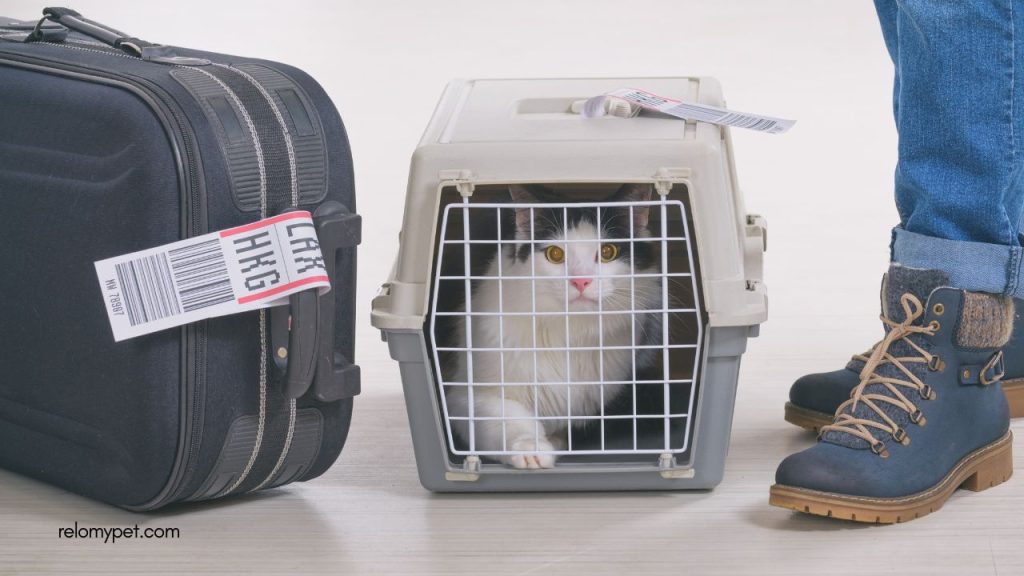
How Do I Choose the Right Pet Travel Crate?
Choosing the correct crate is one of the most important parts of safe pet travel.
For pets traveling in cargo, airlines generally require crates that meet International Air Transport Association (IATA) Live Animal Regulations.
Your pet should be able to:
- Stand naturally
- Turn around comfortably
- Lie down without restriction
The crate should also provide:
- Excellent ventilation
- Secure fasteners
- Leak-proof flooring
- Appropriate food and water containers
How Can I Help My Pet Get Used to the Crate?
Crate training should begin several weeks before departure.
Helpful tips include:
- Leave the crate open at home.
- Feed meals inside the crate.
- Add familiar bedding or toys.
- Practice short periods with the door closed.
- Reward calm behaviour.
Making the crate a familiar, positive environment helps reduce travel stress.
How Early Should I Start Planning International Pet Travel?
The earlier, the better. Some countries require preparations months before departure.
A good general guideline is:
- Domestic travel: several weeks
- International travel: 2–6 months
- Countries with strict import rules: even longer
Planning early provides enough time to complete veterinary requirements, documentation, airline bookings, and any destination-specific procedures.
Why Work With an IPATA Member?
International pet relocation involves much more than booking a flight.
Working with an IPATA member provides confidence that your pet’s journey is being coordinated by professionals who understand:
- Airline regulations
- Import requirements
- Veterinary documentation
- Travel logistics
- Animal welfare
At Relopet International, we combine this professional knowledge with personalized support, helping families relocate their pets safely from Canada to destinations around the globe.
Whether you’re moving across the country or across continents, our goal is the same: making your pet’s journey as safe, comfortable, and stress-free as possible.
FAQ: Frequently Asked Questions About IPATA Pet Travel
IPATA stands for the International Pet and Animal Transportation Association, a global organization representing professional pet transportation companies committed to safe and humane animal transport.
Yes. Relopet International is a proud IPATA member and follows internationally recognized best practices for pet relocation.
For healthy pets that are properly prepared and transported according to airline regulations, air travel is considered a safe and reliable method of transportation.
Generally, no. Sedation is not recommended for most pets during air travel because it can increase health risks. Always consult your veterinarian before travel.
Preparation timelines vary depending on the destination. Some countries require only a few weeks, while others require several months of advance planning.
Yes. Relopet International specializes in international pet relocation from Canada and assists with documentation, airline arrangements, travel planning, and destination requirements.
The best first step is to contact a professional pet relocation company as soon as you know your moving date. Early planning helps ensure enough time for veterinary requirements, paperwork, and travel arrangements.
Contact Relopet International
For seamless and stress-free pet transportation services, rely on Relopet International. We understand the importance of your pet’s safety and comfort, and our expertise ensures a smooth travel experience for both you and your furry companion. Contact us today to learn more about our services.